
Researchers
Researchers
Soy Researchers

Robert Koch, Advancing Integrated Pest Management for Soybean Gall Midge and Soybean Aphid
Robert’s research program focuses on applied ecology and integrated pest management of arthropods associated with soybean. The goal, in conjunction with his extension program, is to improve the environmental and economic sustainability of crop production through integrated pest management. Robert is the director of Extension’s Institute for Agricultural Professionals and he leads efforts to connect agricultural professionals with the latest crop research to help them make economically and environmentally wise crop management. decisions.
 Megan McCaghey, The utility of a molecular assay in determining Phytophthora sojae pathotypes for soybean
Megan’s research is centered on translational research of soil-borne fungi that cause crop diseases. She’s interested in questions related to understanding the ecology and epidemiology of soil-associated fungi and oomycetes and enhancing host disease resistance to improve management. She’s also passionate about teaching using learner-centered and inclusive teaching strategies.
d
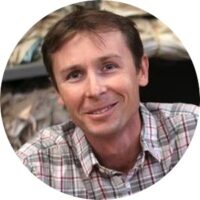
Aaron Lorenz, Overcoming Resistance Breakdown: Public soybean breeding for new sources of SCN resistance
Aaron Lorenz is an associate professor of soybean breeding and genetics in the department of agronomy and plant genetics at the University of Minnesota. Dr. Lorenz’s research focuses on the optimization and application of genomics and phenomics to an applied cultivar development program. Additional areas of research include the mapping of genes underlying complex traits relevant to soybean production, and the development of soybean varieties adapted to new cropping systems. Dr. Lorenz teaches introductory plant genetics and breeding to undergraduates, and advanced plant breeding to graduate students.
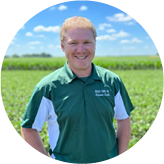
Andrew Lueck, 2025 Adjuvant Tank Mix Impact on 2,4-D, Lactofen, and Glufosinate on Waterhemp and Giant Ragweed in Soybean
Andrew Lueck is the founder and owner of Next Gen Ag LLC. Finding his passion in agriculture growing up on a family farm, his goal is to contribute to the future of agriculture, the “Next Generation”, through the services his company can provide to industry collaborators. What Andrew enjoys most about running Next Gen Ag is continuing to build professional relationships with his industry partners and mentoring his employees to encourage professional growth. Andrew emphasizes integrity, organization, process, communication, and timeliness of response and data return at trial completion; and, Andrew holds the same expectations for his staff.
 Jenna Whitmore, 2025 Adjuvant Tank Mix Impact on 2,4-D, Lactofen, and Glufosinate on Waterhemp and Giant Ragweed in Soybean
Jenna is a graduate from Minnesota State University, Mankato, with degrees in Business Marketing and Business Management. The agriculture industry has always intrigued her and she is excited to continue to grow professionally through her role at Next Gen Ag. Jenna aligns with the company values and prides herself on being organized, creative, and determined to complete tasks on time with great communication and new ideas for improvement. While here at Next Gen Ag, she has learned a tremendous amount about agriculture research and looks forward to continuing to learn and work with collaborators next year and beyond.
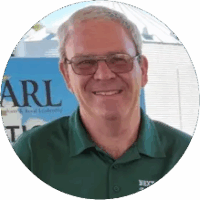 Bruce Leuck, 2025 Adjuvant Tank Mix Impact on 2,4-D, Lactofen, and Glufosinate on Waterhemp and Giant Ragweed in Soybean
Bruce has been with Next Gen Ag since the beginning. He has over 30 years of past research-related agricultural experience. Bruce is vital to the operation and helps keep all the equipment running smoothly. He can build and fix anything we need.
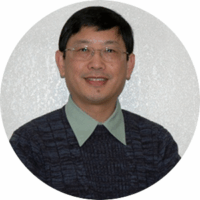 Senyu Chen, Soybean Cyst Nematode Biology and Management
Senyu is a professor with the University of Minnesota in the plant pathology working at the Southern Research and Outreach Center. Senyu's research focuses on soybean cyst nematodes (SCN) and other plant-parasitic nematodes in the soybean-corn production systems. The overall goals are to develop better management strategies and minimize yield loss caused by SCN and other nematodes. A series of studies has examined the effectiveness of the cultural, biological and chemical controls of plant-parasitic nematodes.
d
 Fariba Heydari Soreshjani, Protecting Soybeans from SCN and SDS: How Seed Treatments Improve Plant Health
Fariba is a post-doctoral associate with the Southern Research and Outreach Center in Waseca, Minn.
d
d

Dean Malvick, Management and Detection of Soybean Root and Stem Diseases
Dean's work at the University of Minnesota is divided between conducting research and developing extension education programs on the biology and management of crop diseases. His research focus is on a program on the biology and management of fungal and oomycete plant pathogens and their interactions with plants. Dean's primary extension responsibility is to develop and deliver educational programs for producers, extension educators and other agricultural professionals regarding the occurrence and characteristics of crop diseases as well as strategies for their management using effective, economic and environmentally sound strategies.
 Seth Naeve, Managing risk in a down cycle with soybeans
Seth is a soybean agronomist with the University of Minnesota and an associate professor in the Department of Agronomy and Plant Genetics. Dr. Naeve's research program focuses on development of novel strategies for the efficient production of soybeans. He was raised on a corn and soybean farm in Iowa, and received his bachelor's degree in biology and doctorate in crop production and physiology from Iowa State University.
 Debalin Sarangi, Effect of Cover Crop Termination Timing on Soil Moisture Availability for Soybean
Debalin's goal of his research program is to understand the evolutionary biology of the weeds and develop integrated weed management (IWM) strategies that can protect water quality and enhance crop productivity and economic returns. He takes a collaborative research approach to address weed management challenges. The goal of his Extension program is to provide leadership in the development of best management practices (BMPs) to reduce the risks of herbicide resistance evolution in weeds. The program is informed by stakeholders' needs and committed to providing timely, science-based education materials to the Minnesota growers, consultants and agricultural industry partners.
Corn Researchers
 Dr. Lindsay Pease, Tracking Nitrogen Mineralization in Northwest Minnesota Soils Growing Corn
Lindsay Pease is an Associate Professor and Extension Specialist in Nutrient and Water Management. Her work focuses primarily on nitrogen and phosphorus management in row crop systems with an emphasis on nutrient loss in agricultural runoff. She is excited to work with Minnesota farmers to build resilient, sustainable agricultural production systems.

Dr. Tim Griffis – Effects of procyanidins on corn growth and nitrous oxide reduction
Tim Griffis is a Professor at the University of Minnesota. His research aims to improve the scientific understanding of the biophysical mechanisms that govern the exchange of energy and mass between the Earth’s surface and the lower atmosphere.
 Dr. Ian Tonks – Engineering Degradability into Corn-based Plastics
Ian Tonks is the Associate Head of Chemistry and Lloyd H. Reyerson Chaired Professor at the University of Minnesota – Twin Cities, and associate editor for the ACS journal Organometallics. He has been on the faculty at UMN since 2013, where he teaches inorganic and organic chemistry and conducts research into sustainable catalysis and polymer synthesis. His team’s research on bio-derived sustainable plastics has been supported by the MN Corn Research and Promotion Council since 2014. He is also the co-founder and CSO of LoopCO2, a start-up company aimed at commercializing biodegradable plastics made from carbon dioxide and bio-butadiene.
Brad Carlson – Nitrogen Smart
Brad Carlson is an Extension Educator with University of Minnesota Extension. His work focuses on nutrient management, water quality, and precision agriculture. He grew up on a small farm north of Janesville in Waseca County. He has a bachelor’s degree in Soil Science from the University of Wisconsin – Stevens Point, and a master’s degree in Soil Science with a minor in agronomy from the University of Minnesota. He has worked for University of Minnesota Extension since October of 1994. He is based out of the Mankato Regional Office, and his responsibilities are state-wide.
Dr. Dan Kaiser – Is Fixed Ammonium an Important Part of Nitrogen Cycling? ff dfdfg
Dan Kaiser is an Associate Professor at the University of Minnesota. His areas of interest include crops and nutrient management, and his research includes fertilizer guidelines and soil test method evaluations, nutrient cycling in crop rotations with an emphasis on sulfur, fertilizer placement, and development and use of precision agriculture technologies.

Dr. Fei Yang – Emergence of European Corn Borer Resistance to Bt Corn and Benefits of Seed Treatments Against Corn Rootworm
Fei Yang is an Assistant Professor and Extension Entomologist at the University of Minnesota. His program focuses on ecology and integrated pest management (IPM) in corn insect pests, including insect-plant interactions, host plant resistance, insecticidal resistance management (IRM), and transgenic Bt corn. His research and Extension programs use integrative approaches in ecology, insect biology, population genetics, and molecular biology to improve the environmental and economic sustainability of corn production.
 Dr. Devanshi Khokhani – Developing biocontrol against corn pathogens
Devanshi Khokhani is an Assistant Professor at the University of Minnesota. Her research focuses on understanding plant-associated microbes and using them to improve nutrient uptake and naturally protect crops from disease.
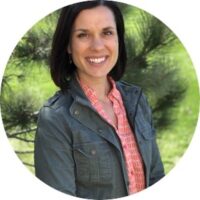
Dr. Heidi Peterson – Soil Management Strategies to Mitigate Impacts of Variable Precipitation
Heidi Peterson is an Adjunct Professor at the University of Minnesota and leads Sand County Foundation’s agricultural conservation team. Her research areas include water resources sustainability, agricultural nutrient cycling and 4R nutrient stewardship, and evaluation of agricultural Best Management Practice (BMP) effectiveness for soil and water conservation. She is currently leading a multi-state soil health, farmer-to-farmer outreach project.